

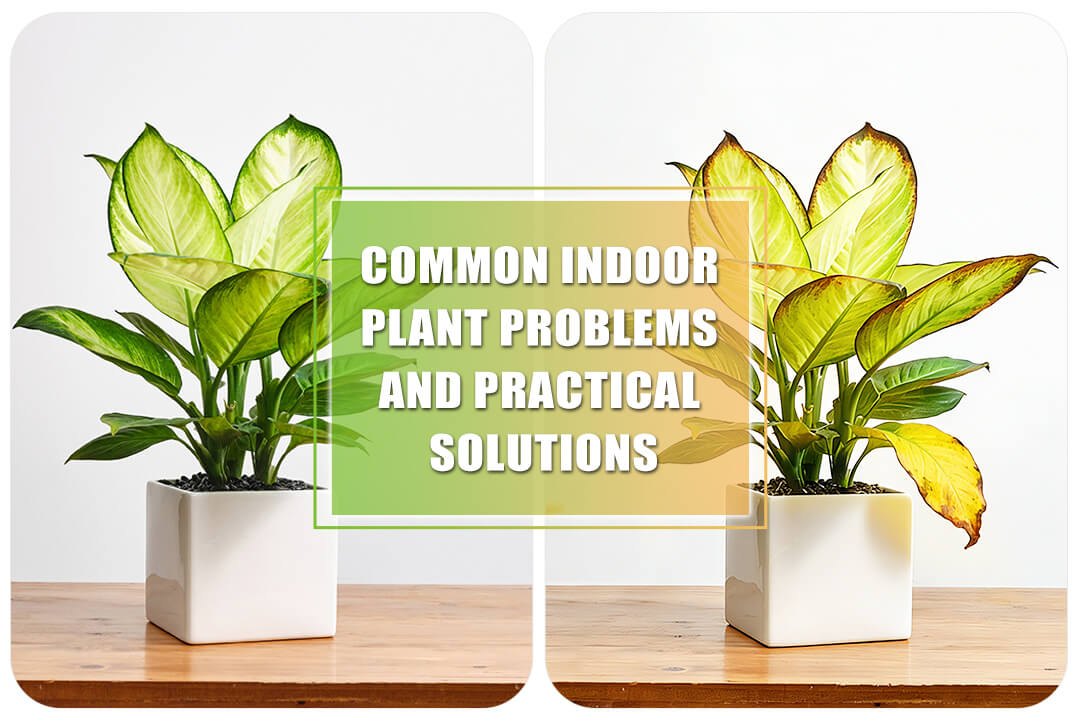
Indoor plants improve living spaces, support well-being, and bring natural structure into modern homes. Yet many plant owners experience recurring issues: yellowing leaves, drooping stems, slow growth, or unexpected pests.
In most cases, these problems are not caused by a “difficult plant,” but by environmental imbalance. Understanding how indoor conditions differ from natural outdoor ecosystems is the first step toward solving them.
Below are the most common indoor plant problems and practical, stable solutions.
1. Yellowing Leaves
Yellow leaves are one of the most frequently reported concerns.
Common Causes
• Overwatering leading to root oxygen deprivation
• Underwatering over extended periods
• Insufficient light
• Nutrient imbalance, particularly nitrogen deficiency
• Natural aging of older leaves
Practical Solutions
First, check soil moisture rather than adjusting watering immediately. Insert a finger 1-2 inches into the soil. If it feels consistently wet, reduce watering frequency and improve drainage.
If soil is dry and compact, water thoroughly until excess drains out.
Evaluate light exposure. Many indoor plants require bright, indirect light. If growth is weak and leaves are pale, consider relocating the plant closer to a window.
It is also important to distinguish between natural aging (lower leaves turning yellow gradually) and systemic stress (multiple leaves yellowing rapidly).
2. Drooping or Wilting Leaves
Drooping foliage often signals water imbalance, but not always.
Common Causes
• Acute underwatering
• Root rot from prolonged overwatering
• Sudden temperature changes
• Very low indoor humidity

Practical Solutions
Check soil first. If dry, water thoroughly and monitor recovery within 24 hours. If soil is soggy and has a sour smell, roots may be stressed.
Avoid placing plants near heating vents, air conditioners, or cold drafts. Indoor temperature swings can stress foliage, especially during seasonal transitions.
Increasing air stability—rather than dramatically increasing humidity—often improves recovery.
3. Slow or Stalled Growth
Many plant owners worry when plants appear inactive for months.
Common Causes
• Insufficient light intensity
• Seasonal dormancy
• Root-bound conditions
• Compacted or depleted soil

Practical Solutions
Assess whether the plant is in a natural rest period. Many species grow more slowly in winter.
If light levels are low year-round, repositioning to a brighter location may significantly improve growth.
Check for root crowding by gently sliding the plant out of its pot. If roots circle densely around the root ball, repot into a container slightly larger in diameter.
Avoid over-fertilizing in response to slow growth. Growth is driven primarily by light and root health, not fertilizer alone.
4. Brown Leaf Tips or Scorched Edges
Brown edges are often mistaken for disease.
Common Causes
• Low humidity
• Salt buildup from fertilizer
• Mineral accumulation from tap water
• Direct sun exposure
Practical Solutions
If humidity is consistently low, improve airflow and avoid placing plants near heating systems.
Flush the soil periodically with distilled or filtered water to remove excess salts.
Review fertilization frequency. Many indoor plants require less fertilizer than expected, especially during non-growing months.
Relocate plants receiving harsh afternoon sun to prevent leaf scorch.
5. Pest Infestations
Common indoor plant pests include aphids, spider mites, fungus gnats, and scale insects.
Why They Appear
• Poor air circulation
• Overwatering
• Bringing new plants indoors without inspection
• Plants under stress
Practical Solutions
Inspect the undersides of leaves regularly. Early detection prevents widespread infestation.
Isolate affected plants immediately.
Use mild insecticidal soap or rinse foliage with lukewarm water to reduce pest populations. Avoid overly aggressive chemical treatments unless infestation is severe.
Maintaining stable conditions reduces plant stress and lowers susceptibility to pests.
Building a Stable Indoor Plant Environment
Most indoor plant problems originate from instability rather than neglect.
Four environmental variables determine long-term plant health:
• Light consistency
• Water balance
• Temperature stability
• Air circulation and humidity balance
Rather than reacting to each symptom individually, observe patterns over time. Small, steady adjustments are more effective than drastic changes.
Conclusion
Indoor plant care is less about constant intervention and more about environmental balance. Yellow leaves, drooping stems, slow growth, and minor pest issues are often reversible when underlying conditions are corrected.
With consistent observation and moderate adjustments, most indoor plants can recover and thrive in a home environment.
Share:
Winter Greenhouse Growing in the United States: A Practical Guide
From Winter to Spring: How to Care for Plants During the Seasonal Transition